How Light Shapes Sleep: A Science-Based Guide
Circadian lighting is moving from wellness trend to home design essential.
What you'll achieve
By the end of this guide, you will have:
- A circadian-friendly lighting schedule for your home
- Faster sleep onset and more consistent wake times
- A shopping list of bulb types and placements
What you'll need
Your body's internal clock is exquisitely sensitive to light. Modern homes, flooded with blue-spectrum LEDs late into the evening, are working against millions of years of evolution. Understanding how light shapes sleep is the first step toward reclaiming rest in an artificially illuminated world.
Follow these steps
Get bright light within 30 minutes of waking
Outdoor light is best; a 10,000 lux lamp works on dark mornings.
Dim lights 2 hours before bed
Switch to warm 2200–2700K bulbs and reduce overhead brightness by half.
Remove screens from the bedroom
Or use night mode plus physical distance—melanopsin cells detect light through skin too.
Install motion night lights
Red-spectrum bathroom lights preserve melatonin during nighttime trips.
Automate with smart schedules
Program bulbs to shift color temperature automatically—willpower fails; automation persists.
Circadian Rhythm Basics
Your circadian rhythm is a roughly 24-hour cycle governed by the suprachiasmatic nucleus in the brain. Light is its primary zeitgeber—the environmental cue that synchronizes internal time. Morning light advances the clock, promoting earlier sleep onset. Evening light delays it, pushing bedtime later and suppressing melatonin production. Disrupt this signal consistently, and sleep quality, mood, metabolism, and immune function all suffer.
Melanopsin and Blue Light
Not all light affects circadian rhythm equally. Intrinsically photosensitive retinal ganglion cells (ipRGCs) contain melanopsin, a photopigment most sensitive to blue wavelengths (460–480nm). These cells signal brightness and time of day to the brain, independent of visual perception. Standard LEDs peak in this range—making them excellent for alertness during the day and disastrous for sleep preparation at night.
Two hours of tablet use before bed can delay melatonin onset by 90 minutes.
Evening Light Routine
- Dim overhead lights 2–3 hours before bed; use lamps with warm bulbs (2700K or lower)
- Enable night shift or blue light filters on screens after sunset—or better, stop using screens entirely
- Use motion-activated night lights with amber LEDs (under 2200K) for bathroom trips
- Avoid bright bathroom lighting during nighttime visits; install a dimmer or secondary warm light
- If reading in bed, use a warm-spectrum book light rather than overhead or bedside LEDs
Bulb Types and Color Temperature
Color temperature, measured in Kelvin, determines light's circadian impact. Daylight (5000–6500K) promotes alertness—ideal for kitchens, offices, and morning routines. Warm white (2700–3000K) suits living rooms and dining areas. For bedrooms, aim for 2200K or below in the evening. Smart bulbs from Philips Hue, LIFX, and Nanoleaf can automate these transitions, shifting spectrum throughout the day without manual adjustment.
Room Design for Sleep
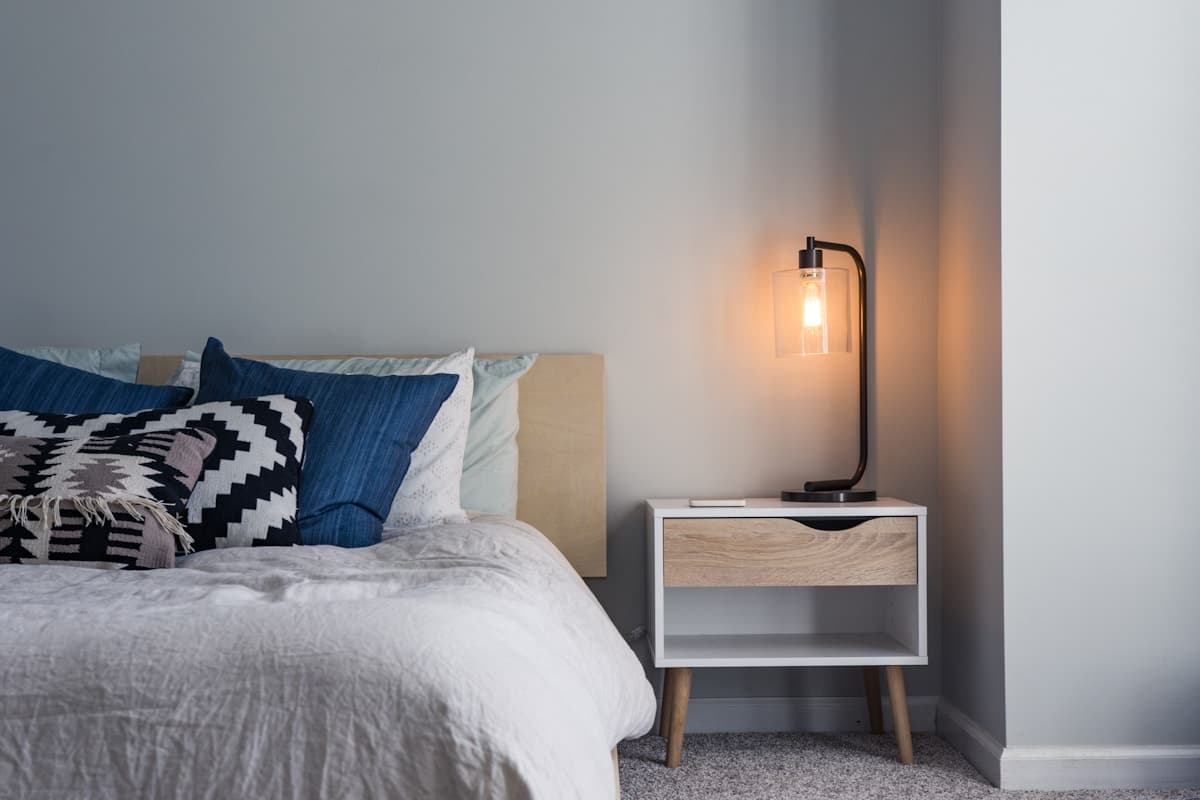
Bedroom design should prioritize darkness and calm. Install blackout curtains or layered window treatments that eliminate street light and early morning sun. Position alarm clocks and charging devices away from the bed to avoid standby LED glow. If your bedroom doubles as a workspace, create visual separation—a room divider, curtain, or distinct lighting zone signals the brain that this space serves rest, not productivity.
Morning Light Exposure
Evening light management only works in partnership with morning exposure. Within 30 minutes of waking, seek bright light—ideally natural sunlight through a window or a 10,000-lux light therapy lamp on cloudy days. This anchors your circadian clock, making evening wind-down more effective. The full cycle—bright mornings, dim evenings—is more powerful than either intervention alone.
Putting It Together
Circadian lighting is not a wellness trend—it is applied chronobiology. Start with one change: replace bedroom bulbs with warm-spectrum alternatives, or commit to dimming lights after dinner. Add morning light exposure next week. Within two weeks, most people notice faster sleep onset, fewer nighttime awakenings, and improved morning alertness. Your ancestors synchronized with the sun. Your home can too.
Common Mistakes
- Using phone night modes as a substitute for reducing screen time—blue light reduction helps but screen engagement still delays sleep
- Installing bright bathroom lights without dimmers, destroying melatonin during nighttime visits
- Relying solely on blackout curtains while ignoring standby LEDs from chargers and electronics
- Setting smart bulbs to cool white in the evening because it "looks cleaner"
Product Recommendations
For automated circadian lighting, Philips Hue with the app's natural wake-up feature remains the most polished consumer option. LIFX offers higher color accuracy without a hub. For budget setups, Cree and GE Relax bulbs at 2200K cost under ten dollars each. Light therapy lamps from Verilux and Northern Light Technologies deliver 10,000 lux for winter morning exposure. Red-spectrum night lights preserve melatonin during bathroom trips.
90 min
Average melatonin delay from two hours of pre-bed tablet use
Frequently Asked Questions
Can I use orange glasses instead of dimming lights? Blue-blocking glasses help but do not replace environmental dimming—your skin also detects light through melanopsin pathways. How quickly will I see results? Most people notice faster sleep onset within two weeks of consistent evening dimming and morning bright light. Do smart bulbs really matter? Yes—automated schedules remove the willpower requirement that causes most circadian interventions to fail. Should children follow the same protocol? Yes, with stricter screen limits after sunset—developing brains are more sensitive to blue-light disruption than adult brains.